
Guest Post: Dyane Leshin-Harwood’s Story of Hope & Recovery
Updated: Feb 25

Today I have the honor of hosting Dyane Leshin-Harwood’s story of postpartum onset of bipolar disorder. Her story is incredibly inspiring. I had tears in my eyes as I read her gutsy story! I imagine you will as well.
Postpartum mood disorders can include bipolar disorder and postpartum mania — conditions that require specialized care and awareness.
Please join me in welcoming Dyane’s contribution to the Postpartum Support International 2014 Blog Hop.
International Bipolar Foundation
Thank you SO so much for giving me the chance to share this short piece. In January I was selected by the International Bipolar Foundation staff to be their first “Story of Hope & Recovery” for 2014.
My Q&A remains in the IBPF “Story of Hope and Recovery” archives, as they
select several people each year to participate. Here it is, getting a
second life thanks to you, Kathy – and once again, I appreciate you so
much for helping me take part in this awesome blogging event!
Dyane Leshin-Harwood
January, 2014 “Story of Hope and Recovery” International Bipolar Foundation
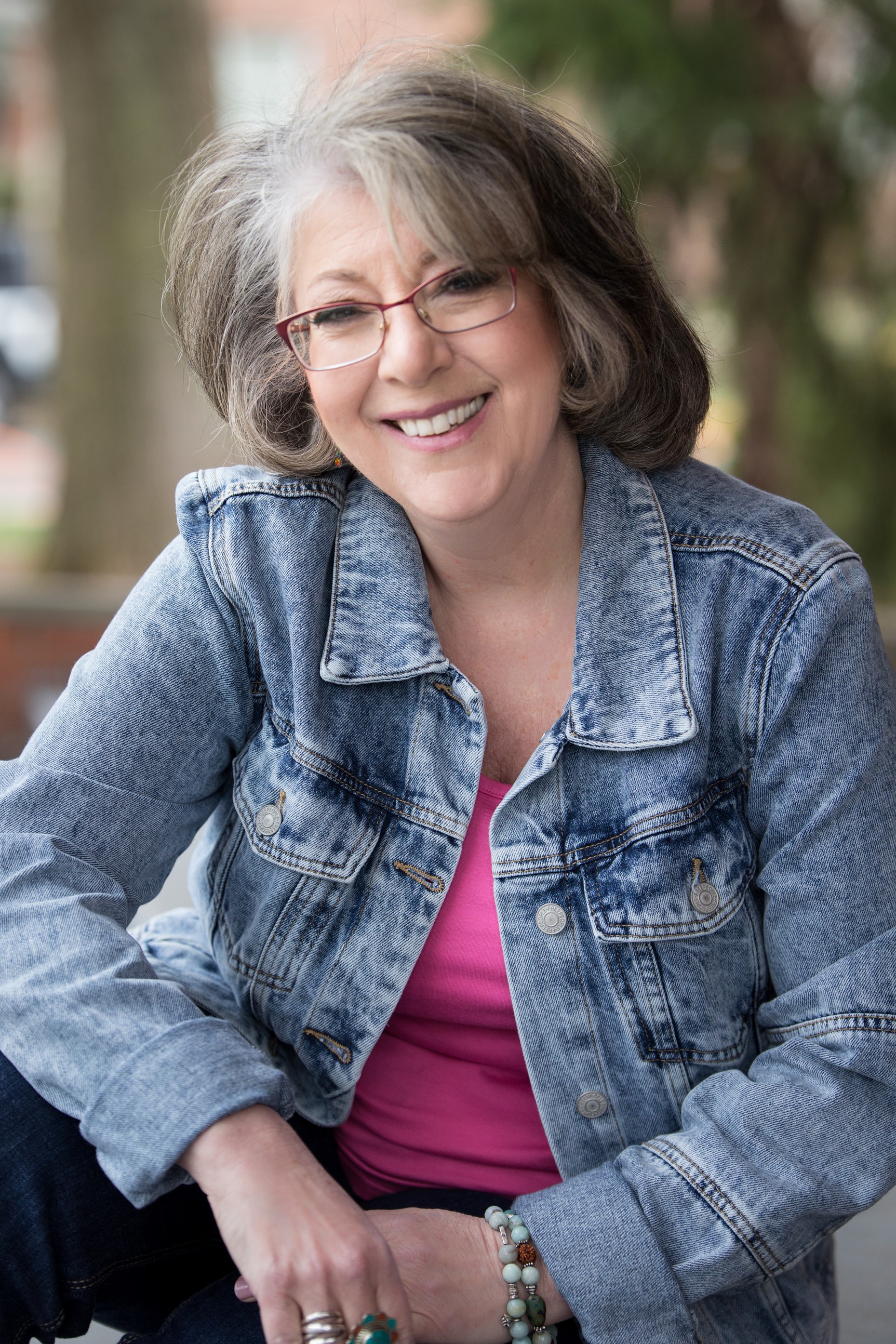
Dyane Leshin-Harwood is a forty-four-year-old married mother of two young girls. Raised in Los Angeles, Dyane grew up close to her father who played violin in the Los Angeles Philharmonic for over twenty-five years and also had bipolar disorder.
Dyane has a B.A. degree from the University of California at Santa Cruz in English and American Literature.
She has been a freelance writer for the past fifteen years and has interviewed such mental health luminaries as Dr. Kay Redfield Jamison and Dr. Martha Manning for her nationally published magazine articles.
Dyane lives in the Santa Cruz Mountains of California where she is working on her book
“Birth of a New Brain – Healing from Postpartum Bipolar Disorder”.
Q: When did you first learn of your diagnosis?
Dyane: : I had given birth to my second daughter, Marilla, at age thirty-seven. Immediately after her birth I became hypomanic and on top of that I also experienced the rare condition of hypergraphia, which is extreme, compulsive writing. Two months later I had full-blown postpartum mania and I admitted myself for hospitalization, where I was officially diagnosed with bipolar disorder one.
Q: Could you describe your support network, positive influences and how you find balance and stability?
Dyane: A few years ago I founded the DBSA Chapter (Depression and Bipolar Support Alliance) for our county and I created a women’s support group. It was there where I met two women with bipolar disorder who have become close friends. I also find support online through Facebook’s miscellaneous private bipolar groups and the Mental Health Bloggers network. BP Magazine’s bloggers are a great resource as well. The International Bipolar Foundation’s Facebook page offers a newsfeed that shares inspiring pictures and quotes. That really brightens my day! I find balance and stability in five key ways: seeing my “team” (psychiatrist and counselor) regularly, medication, steady exercise, writing, and of course enough sleep! My goal this year is to improve my diet and try meditation.
Q: Who is my greatest inspiration and why?
Dyane: My two daughters Avonlea, age 9, and Marilla, age 6. The love I feel for them is ineffable, and their unconditional love for me makes me want to be stable with bipolar more than anything; after all the trauma they’ve been through (I’ve been hospitalized seven times for this illness since Marilla was born.) I am motivated to do all I can to show them that one can live well with a mood disorder.
Q: What is your favorite quote?
Dyane: As a writer I can’t resist quoting my favorite author Madeleine L’Engle. I had the unforgettable experience of working with her at a writer’s workshop.
It was impossible for me to choose just one quote, so here are two short ones from her best known work A Wrinkle In Time:
“Our truest response to the irrationality of the world is to paint or sing or write, for only in such response do we find truth.”
and
“Don’t try to comprehend with your mind. Your minds are very limited. Use your intuition.”
Speaking of the mind, I love what author Melody Moezzi (author of “Haldol and Hyacinths”) said in her recent webinar for the International Bipolar Foundation.
While Melody asserted she didn’t want to glamorize bipolar, she noted:
“There’s something extraordinary about a mind that works differently.”
Q: What is your message of hope to others living with Bipolar Disorder?
Dyan: The beautiful Peter Gabriel song “Don’t Give Up” comes to mind as I write this. There were many times I wanted to give up. I know this will sound like a cliché, but if you are feeling stuck and hopeless, please reach out to others. Seek a therapist and/or psychiatrist.
My Dad always told me that by the time I was older, a cure would be found for bipolar. Although that hasn’t happened yet, we shouldn’t rule out breakthroughs with the tremendous amount of research happening around the world.
I was cynical about feeling hopeful regarding my recovery for such a long time, but that has finally shifted. We can hope together for medical advancements, and in the meantime, do all you can to ask for help so you feel supported, not isolated. You don’t have to suffer needlessly – there is hope for each and every one of you!
If You Need Immediate Support
If you are in crisis in the United States, call or text 988 for the Suicide & Crisis Lifeline.
For pregnancy or postpartum support and local resources, contact:
PSI Warmline (English & Spanish): 1-800-944-4PPD (4773)
Text (EN): 971-203-7773
Email: support@postpartum.net
Visit Postpartum Support International to find local coordinators and support groups.
Stories like Dyane’s remind us of something essential: postpartum mood disorders can include bipolar disorder, and recovery is possible. With treatment, community, and persistence, stability and meaning can return.
Hope is not naïve. It is an act of courage.


