
Self-Heal Plant: A Hidden Treasure in My Healing Garden

Updated: Jul 22
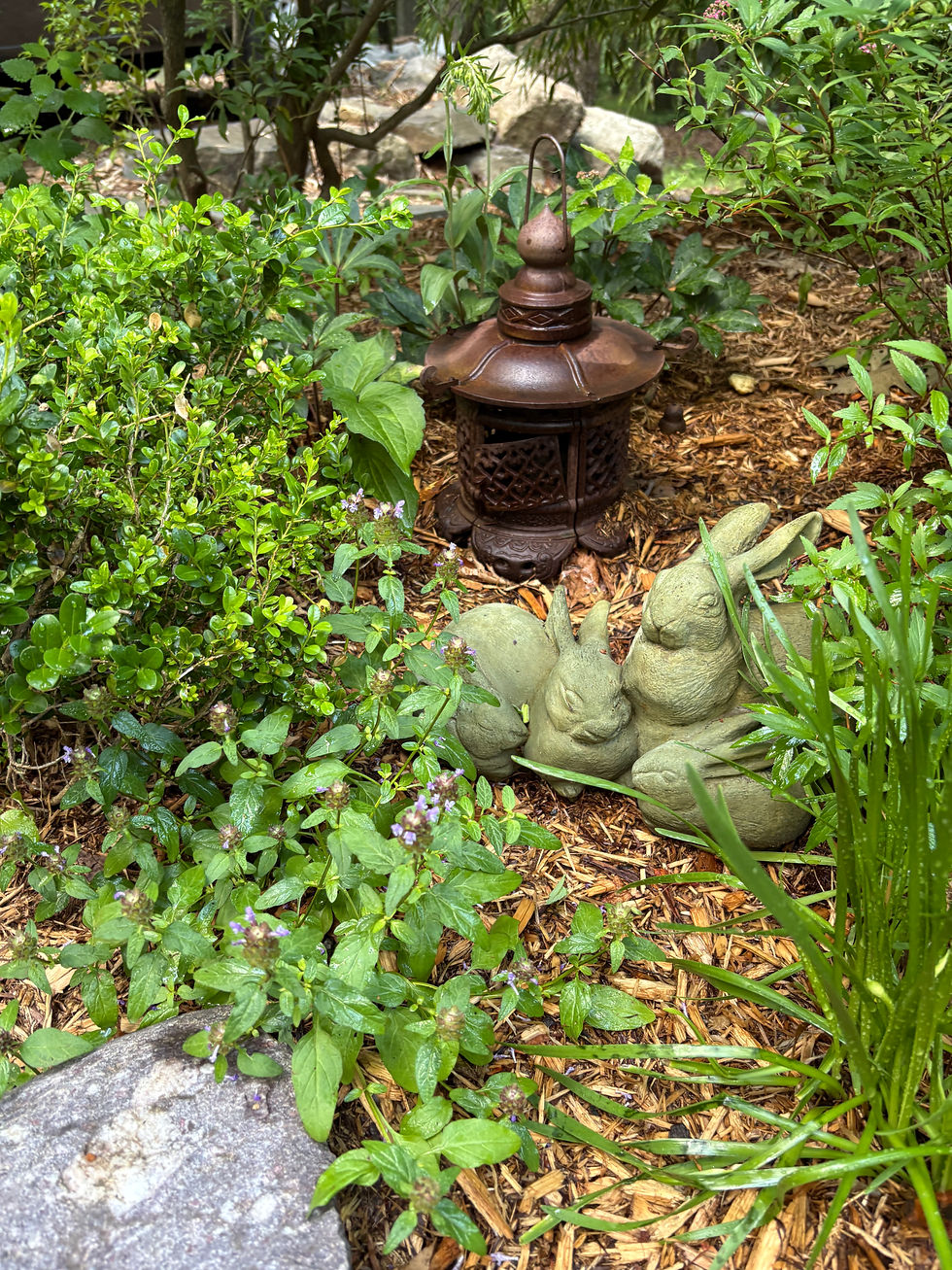
From the Healing Garden
The Healing Garden is an ongoing series inspired by my woodland garden in northern New Jersey. Here I share stories of native plants, pollinators, herbal traditions, mindfulness, and the quiet ways nature invites us to slow down, pay attention, and reconnect with ourselves and the living world.
For years, I noticed little patches of purple flowers blooming quietly in my lawn. I assumed they were just another wildflower—or even a weed—and automatically pulled them out. But I've been cultivating a pesticide- and herbicide-free garden for years. One day I finally actually stopped and noticed the flowers and I thought, What is this pretty little purple flower?
Much to my surprise, I discovered a hidden treasure: self-heal (Prunella vulgaris), a native wildflower with a long history in herbal medicine that also provides valuable food for pollinators.
What Is Self-Heal (Prunella vulgaris)?
Self heal is a low-growing perennial herb belonging to the Lamiaceae (or mint) family. It has a square stem, small leaves, and pretty clusters of small purple flowers. Prunella vulgaris usually thrives in full or partial sunlight. It thrives in fields and at the edges of woodlands. It self seeds and spreads and is beautiful and beneficial.
Why Is It Called Self-Heal?
Self heal has been utilized in numerous cultures worldwide.
Self heal is mentioned by John Gerard, the British herbalist, in his famous Gerard's Herball, published in 1597, as useful for bruises, cuts and internal ailments.
Native Americans brewed self heal leaves into a tea to alleviate digestion issues and sore throats. Additionally, fresh self heal leaves were crushed into salves and compresses to relieve bruises, cuts, and saddle sores.
In Traditional Chinese Medicine, self heal is classified as a cooling herb, meant to bring down liver fire.
While self-heal has a long history in traditional herbal medicine, modern research is still investigating its properties.
A Favorite of Pollinators
Self-heal attracts bees, butterflies, and other beneficial insects, making it a valuable native plant that supports local biodiversity. It can be used as a native, environmentally friendly ground cover, as it is low growing, durable and can withstand mowing and foot traffic, and will still flower.
Gardeners and ecologists generally concur on the plant's ecological advantages, highlighting its function as a larval host for butterflies such as the Clouded Sulphur, a native of North America, which feeds on Self Heal and clover.
Self heal flourishes in areas with partial shade and in moist, well-drained soil, making it an ideal choice for borders, meadows, and butterfly gardens.
Self-Heal in Flower Essence Practice
In addition to its long history in traditional herbalism, self-heal also holds a special place in flower essence practice. Flower essences work on an energetic and emotional level rather than through the plant's chemical constituents.
Self-heal flower essence is traditionally associated with inner balance, self-acceptance, and the soul's natural capacity for healing, wholeness, and making choices that support emotional well-being.
While flower essences are considered a complementary wellness practice and are not supported by the same body of scientific evidence as conventional medicine, many people find them meaningful as part of their personal mindfulness and self-care journey.
Why I Decided to Keep It
I love the healing history of the Self Heal plant and its relationship to humans and pollinators. I also appreciate its beautiful flowers.
I've decided to encourage the growth of this ecologically friendly plant all around my garden. My yard has woodland edges all around. I'm going to transplant some of this special plant along the woodland edge.
As I transplant it, I plan to practice mindful gardening, slowing down and appreciating its long history and ecological value.
I plan to mindfully meditate on the healing history of Self Heal as I plant it around my garden and absorb the healing energy.
Heartlife Reflection
I am reflecting on how long I spent thinking this beautiful, useful plant was a weed. I now respect its long history and its ecological use.
Self-heal reminded me that slowing down and paying attention is its own kind of mindfulness.
The more time I spend in the garden, the more I realize that healing often begins with being open to notice what has been there all along.


