

No, It’s Not All in Your Head
A PTSD Science Series
People living with PTSD are often told—directly or indirectly—that their symptoms are “just anxiety,” “just stress,” or “all in their head.
This series exists to gently correct that misunderstanding.
PTSD is not a failure of will, mindset, or resilience. It is a condition shaped by how overwhelming experiences are processed and stored in the brain, nervous system, and memory. Understanding this can be validating for some people—and unnecessary for others.
This page holds an optional, four-part educational series for readers who want a deeper, science-based explanation of PTSD.
Who This Series Is For
This series may be helpful if you:
Find meaning in understanding why PTSD symptoms happen
Want language for experiences that have been misunderstood or dismissed
Are a clinician, student, or caregiver seeking a neurobiological framework
Feel steadier now and want to explore the science behind trauma responses
This series may not be helpful if you are feeling easily overwhelmed, highly activated, or simply not interested in the science. Skipping it is completely okay.
Insight is not required for healing.
How to Use This Series
Each article can be read on its own, but they are presented in a thoughtful sequence.
You do not need to read ll four parts.
It's ok to pause or stop
If you notice emotional or physical activation, used some grounding techniques
This is educational content, not treatment and not a substitute for professional care.
What the Series Explores
Together, the four articles look at how PTSD affects:
Perception and emotion — how the brain responds under threat
The nervous system — including autonomic and vagal responses
Memory encoding — why traumatic memories feel fragmented, vivid, or present-tense
The body’s protective responses — and why they persist even after danger has passed
The goal is understanding, not fixing.
The Series
These articles can be read in order or individually. Understanding the neuroscience is optional; healing does not require reading every part.
Part 1: No, It’s Not All in Your Head
An overview of common PTSD symptoms and lived experiences, reframing them as nervous-system responses rather than personal weakness.
Part 2: No, It’s Not All in Your Head — The Neuroplatform of Emotion
Explores how trauma shapes the underlying neurobiological platform that influences emotional responses outside conscious awareness.
Part 3: No, It’s Not All in Your Head — The Vagus Nerve
Examines the role of the vagus nerve and polyvagal theory in trauma responses, including patterns of safety, mobilization, and shutdown.
Part 4: No, It’s Not All in Your Head — Memory Encoding
Explains how traumatic experiences are encoded differently in the brain than everyday memories, and why trauma can feel present long after danger has passed.
A Gentle Reminder
Healing from PTSD does not require understanding neuroscience.Many people recover through safety, relationship, somatic support, meaning, or time.
This series is simply here for those moments when knowledge itself feels grounding.
If you’re looking for practical tools or supportive approaches, you may wish to return to the broader PTSD Hub for coping-focused resources.
Selected Further Reading (Optional)
Smart Moves — Carla Hannaford, PhD A foundational text on how movement, sensory integration, and learning shape brain function and emotional regulation. Especially relevant to neuroplasticity and embodied healing.
The Body Keeps the Score — Bessel van der Kolk, MD A widely cited overview of how trauma is held in the body and nervous system, integrating neuroscience, attachment, and clinical observation. Best read selectively and at one’s own pace.
The Developing Mind — Daniel J. Siegel, MD Explores how emotion, neurobiology, and relationships interact across the lifespan. Strong grounding for understanding integration, regulation, and neuroplasticity.
In an Unspoken Voice — Peter A. Levine, PhD Focuses on how trauma responses emerge from the autonomic nervous system and how healing occurs through bodily awareness rather than cognitive processing alone.
Latest Insights + Articles


Expressive Art & Wise Mind: Listening to the Nervous System Through Creativity
Originally posted March 23, 2020. Expressive art is a fun way to create flow and relax your nervous system Listening to the Nervous System Through Sensation and Image About 98% of our mental activity…the reasons why we do things…is unconscious (Bargh, 2017). Expressive Art, a right brain activity, is a way to access those wordless emotional messages swirling beneath our consciousness. Wouldn’t it be nice if you could unearth some of your own motivating energy, and channel it towards...


DBT HOW Skills: Non-Judgmentally, One-Mindfully, Effectively
DBT How Skills: Non-judgmentally, One-Mindfully, Effectively Why HOW Skills Matter in DBT Mindfulness skills can be applied to everyday life, used on an ordinary, everyday basis. We continue with learning the subtle points of DBT Mindfulness Skills for daily life. The first post about Mindfulness Skills for Daily Life covered “What” skills: Observe, Describe, Participate as in “What” to do as you incorporated mindfulness into the activities of your daily life. The next set of DBT...
_pdf.png)
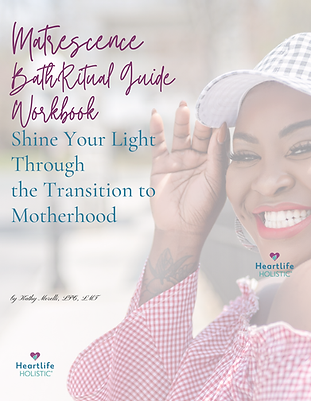
Matrescence Bath Ritual Guide & Workbook
A guided ritual for rest, reflection, and nervous system support during the transition into motherhood.
Motherhood changes us emotionally, physically, relationally, and spiritually. Yet many women move through this profound developmental transition without space to pause, reflect, or tend to themselves with care.
The Matrescence Bath Ritual was created as a gentle companion for this season of change.
This offering includes:
an 8-minute guided Matrescence reflection
a beautifully designed ritual guide & workbook
prompts for emotional processing and identity reflection
nervous system–supportive self-care practices
a quiet space to pause during the transition to motherhood